على خُطى هاجر
Hajj is a transformative experience, so much so that it adds a moniker to people’s names that they proudly carry for the rest of their lives. Think of Malcolm X’s transformation to Al-Hājj Malik al-Shabazz.
There is much I could reflect on here, and I hope you do take some time to read more about the significance of these ten days and the Hajj journey in Islam. But I am not a preacher, I am a writer. And if I were to preach, I would have little to say beyond self-reproach—broken as I am on the path of faith.
As a writer, however, I find myself moved on this occasion to write a letter to a woman whose story is central to the ritual being performed by over 1.5 million people this year.
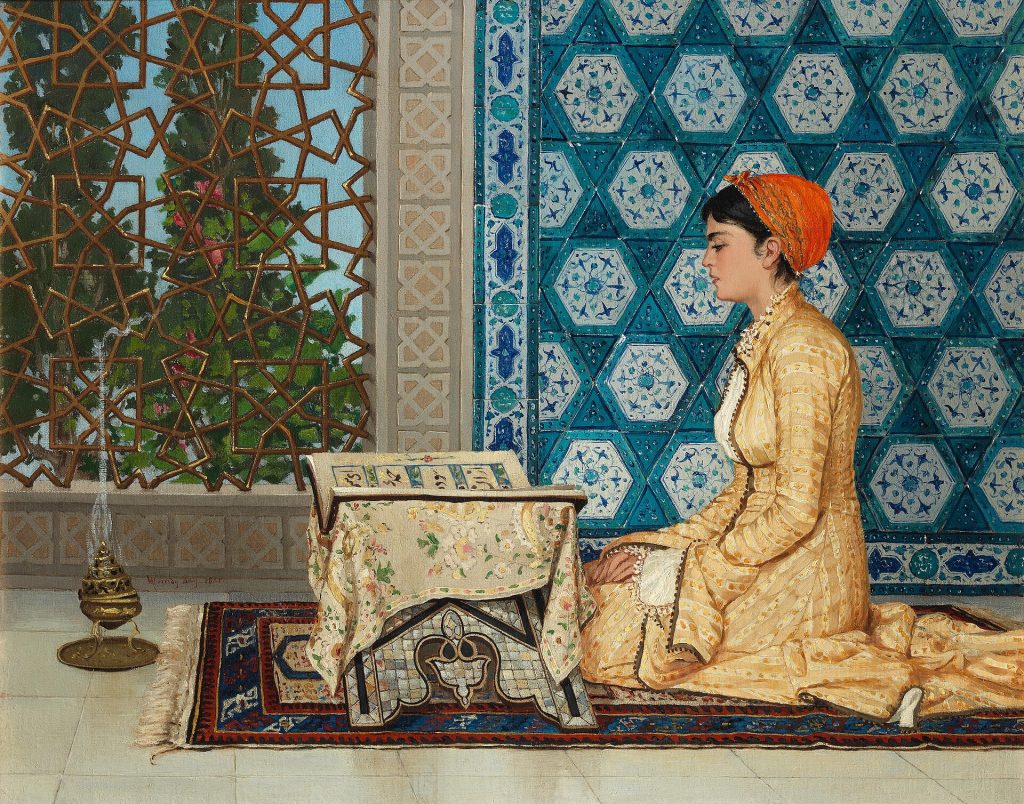
Dear Hajar,
I write to you from the mountains of New Hampshire. They’re very different from the mountains of Makkah, each with their own majesty. I think of you often these days, my sister. I hope you’ll permit me to call you that. I prefer it to Ibrahim’s wife, or Ismail’s mother. Beautiful titles in their own right, of course. But I like to think of you as mine too.
I think of you often these days because I cannot shake this image I have of your heel cracking as you run from hill to hill, from Safa to Marwa, in search of food and water for your child, for yourself. A profound act of mothering and striving for survival in that hollow valley.
Why were you left, Hajar? I understand it was an act of obedience to God, a display of complete trust in the Creator. And yet, still, I ask: why were you abandoned on that day?
There is a Christian man, a very good writer by the name of Søren Kierkegaard, who wrote about the story of Abraham binding Isaac to sacrifice him for the sake of God (you and I know, of course, that it was in fact your son Ismail, and not Sarah’s Isaac, who saw the gleam of the knife that day). He called this work Fear and Trembling referencing Philippians 2:12: “Therefore, my beloved, as ye have always obeyed, not only in my presence, but now much more in my absence, work out your own salvation with fear and trembling.”
I bring this up to say that Kierkegaard begins his work with four retellings of the story of Abraham’s sacrifice of his son. In one, Abraham hesitates and makes Isaac lose his faith. In one, he throws himself to the ground and seeks forgiveness for even considering killing his child. In one, he is willing to do it; then God reveals the ram, and Abraham slaughters the animal instead—yet he is left with extreme bitterness that God would even put him in such a position. Kierkegaard writes, “Isaac flourished as before; but Abraham’s eye was darkened, he saw happiness no more.” And in one, Abraham yells at Isaac in the last moments with a demonic flair, confessing to him that he is an idol-worshipper who wants to kill his child, and that God would never command such a thing. Kierkegaard writes, “Then Isaac trembled and cried out in his fear: “God in heaven, have pity on me, God of Abraham, show mercy to me, I have no father on earth, be thou then my father!” But Abraham said softly to himself: “Father in heaven, I thank thee. Better is it that he believes me inhuman than that he should lose his faith in thee.”” Ultimately, however, Kierkegaard believes the story could only have gone the way it did for Abraham to have had complete and perfect faith.
But I’ve always wondered: why didn’t Abraham kill himself?
I think of your cracked heel, Hajar, of you running seven times, back and forth in a frenzy. I’ve walked your path many times myself, as we’ve been commanded to do in commemoration of your sacrifice and faith. Back and forth between Safa and Marwa, praying for myself, for my family, for the world. But now I think I’ve done it all wrong, I should have been praying for you. Woman displaced. Woman uprooted. Woman tested. Woman suffering. Woman in striving.
I pray for you now. I wish I had your faith. I wish you’d never had to prove yours.
Write to me, my sister. Tell me how you did it. Tell me how one sees the fire eating their beloved and holds back from setting the whole world ablaze.
I kiss the ground the holds your cracked heels, O Hajars of the world. Every plot of suffering has turned, through you, into the valley between Safa and Marwa. Gaza, Sudan, Congo, Minab—you too, are Holy Ground.