Documentary
Go Back
Essay
Unravelling the Weight
When working with acrylics, if you layer thick paint before the undercoat is dry, the pigment underneath gets dragged back up to the surface. No matter how carefully you lay down a fresh stroke, the wet paint beneath catches the edge of your brush and bleeds through. That was what was happening on the canvas when I painted The Weight of the Tradition. I was trying to cover over a period of intense personal rupture, but the feelings underneath kept dragging themselves back into view.
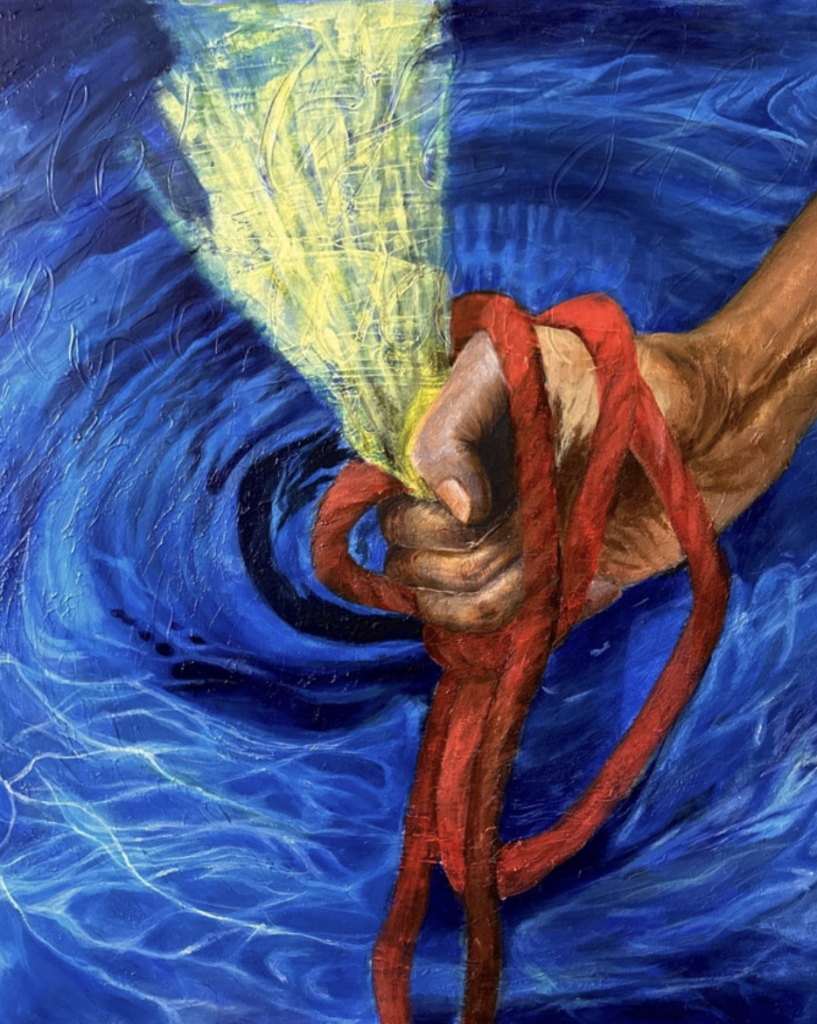
The Weight of Tradition
2025
Acrylic on canvas
© Sonisa Noun, 2025
Primary artwork for “Unravelling the Weight”
2025
Acrylic on canvas
© Sonisa Noun, 2025
Primary artwork for “Unravelling the Weight”
I was carving dark, rigid shapes over fluid, organic lines, using heavy palette knives and coarse brushes. I wanted to give physical weight to something that had felt crushing yet invisible: the social scrutiny of a public marital breakdown in a society where a woman’s silence is her expected virtue.
In Cambodian culture, a thin red string bracelet is meant to be a blessing, a symbol of protection, sacred connection, and ancestral values passed down through generations. It shares a quiet resonance with the red thread of fate, an unseen tether binding two souls or anchoring you to your destiny. But on my canvas, that delicate red thread did not stay soft. It grew into a coarse, heavy rope that binds and ties you up under the guise of duty.
I painted a hand clinging tightly to that thick red cord, holding on even as it cuts into the skin. Letting go is never simple or clean. Your fingers cramp around what you were taught to hold, because releasing your grip feels like betraying the only life you have ever known. Below, the rope slowly unravels into churning blue water. I wanted that water to feel deeply ambiguous. At a glance, it might look like a peaceful, cleansing tide, a quiet place to wash away heaviness. But look closer, and it feels like a terrifying mini ocean, full of twirling waves and unpredictable currents. Letting go means releasing your grip and dropping into that water, not knowing whether you will float or drown.
Growing up in a Buddhist family in Cambodia, I was taught to protect family harmony above all else. You learn to carry expectations gracefully, keep delicate heartbreaks strictly within the home, and absorb friction without causing a ripple outside. Marriage is rarely viewed as just a bond between two individuals, it is an anchor for family standing, social respectability, and generational pride. When a marriage breaks, it is almost never treated as a private sorrow. It becomes a community spectacle.
When my marriage dissolved, it was not a quiet, dignified fading away. It was filled with arguments, bitter distress, and bad blood that spilled over into social spaces. In traditional circles, a marital fracture triggers an immediate, hostile appetite for fault. Whispers circulate fast, and people quickly look for a scapegoat. There is an unspoken expectation that a woman should endure almost anything to keep the household intact. When she doesn’t, or when the marriage collapses anyway, the judgment falls heavily on her shoulders.
As property disputes escalated, I faced a choice: stay in the mud and battle endlessly, or surrender. I chose to step back. I signed away claims to property that was rightfully mine, accepted far less than my share, and walked away. To those around me, stepping down looked like guilt or weakness. Gossip spread that I was at fault precisely because I did not fight back. I endured the false assumptions, the quiet pity, and the public humiliation of leaving with very little.
Before moving into design research, I worked in commercial advertising as an art director. Advertising is built on smooth surfaces like designing polished campaigns that make life look seamless in a single glance. But when your personal world fractures into bad blood and public scrutiny, that commercial vocabulary feels hollow. You cannot design a key visual to mend a broken life, and you cannot brand your way out of social humiliation.
I went back to physical paint and sketching because raw media do not allow you to fake anything. On a canvas, there is no undo button, no digital retouching, and no corporate polish to hide behind. You have to sit with the canvas, the pigment, and the raw texture of your own hands. Painting The Weight of the Tradition became my way of building a boundary around the distress. It allowed me to take the weight out of my body and place it onto a surface where I could look at it objectively.
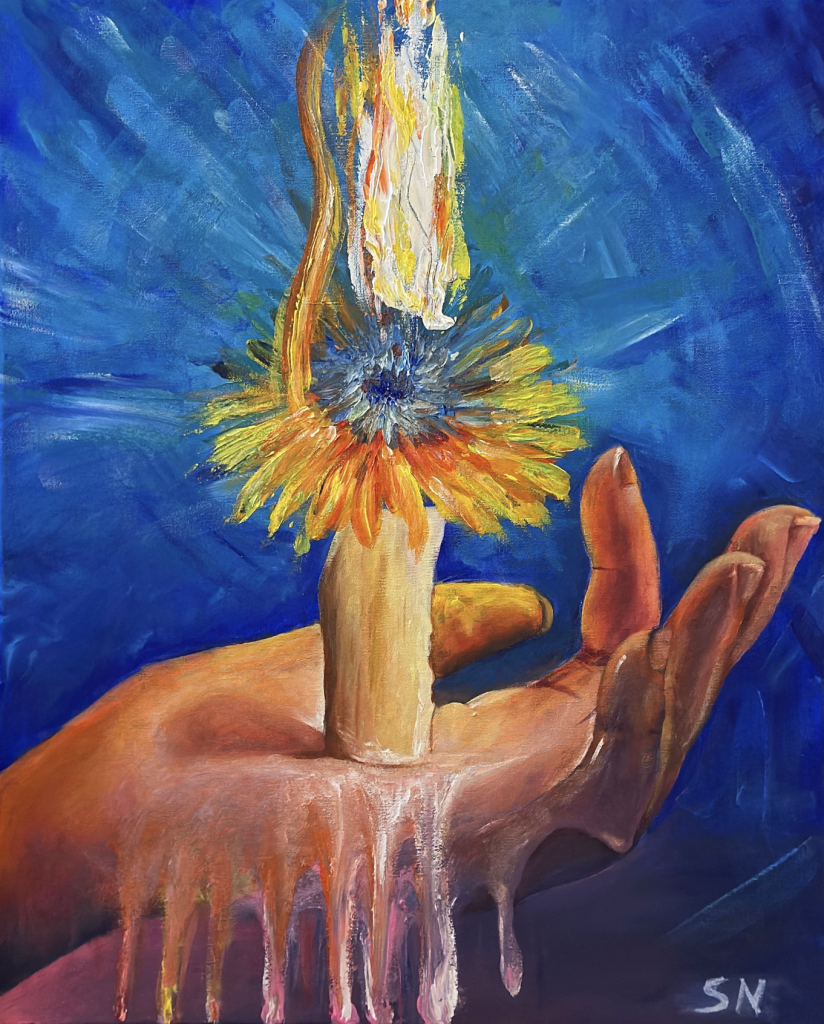
Image 1:
'Flame'
2025
Acrylic on canvas
© Sonisa Noun
Additional artwork supplied for editorial consideration
2025
Acrylic on canvas
© Sonisa Noun
Additional artwork supplied for editorial consideration
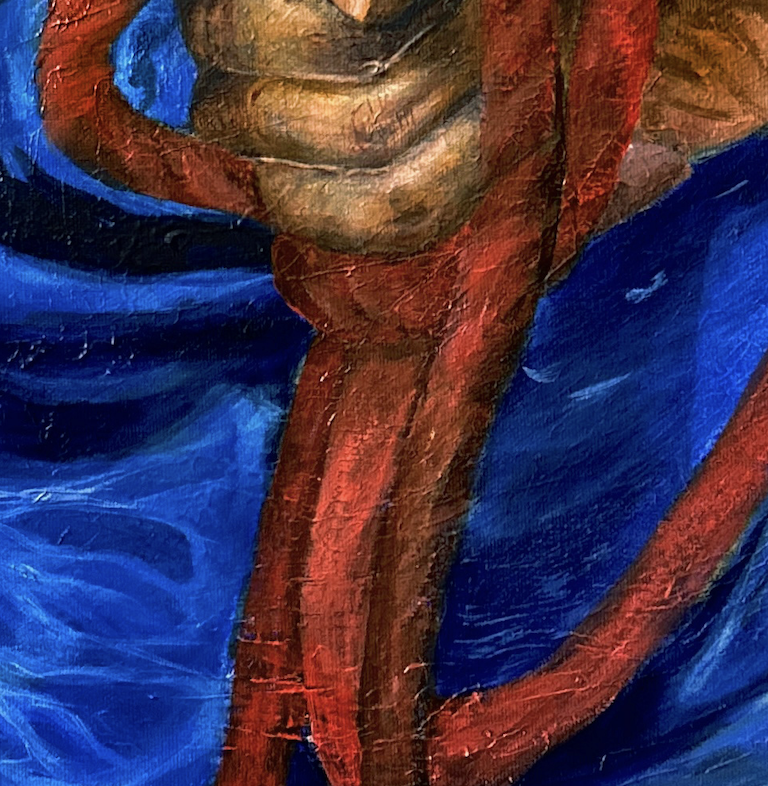
Image 2:
Details from 'The Weight of Tradition'
2025
Acrylic on canvas
© Sonisa Noun, 2025
Primary artwork for “Unravelling the Weight”
2025
Acrylic on canvas
© Sonisa Noun, 2025
Primary artwork for “Unravelling the Weight”
1: 'Flame'
2025
Acrylic on canvas
© Sonisa Noun
Additional artwork supplied for editorial consideration
2: Details from 'The Weight of Tradition'
2025
Acrylic on canvas
© Sonisa Noun, 2025
Primary artwork for “Unravelling the Weight”
It was during that season of exhaustion and material surrender that I found myself thinking back to a quiet memory from a few years earlier.
SONISA NOUN:
Long before my marriage broke, I had visited a mosque for the first time during a trip to Kuala Lumpur. I remember stepping inside as a Cambodian Buddhist tourist, curious but deeply hesitant. I stood near the entrance, unsure where to place my shoes or cover my shoulders. A volunteer auntie noticed my hesitation. Instead of watching with judgment, she walked over with a warm smile. She helped me adjust my robe, guided me toward the quiet courtyard, and began explaining things to me in a soft, welcoming voice.
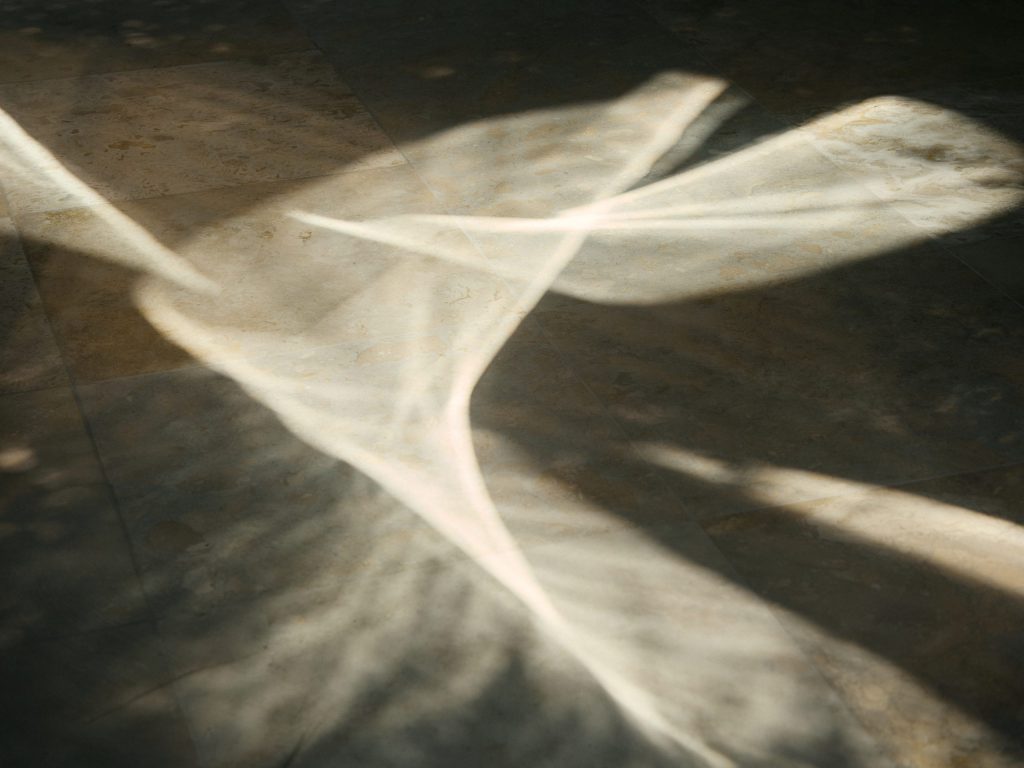
When I shared my name, she smiled warmly and told me that Nisa is right there in the Quran, in a chapter called An-Nisa, dedicated entirely to women. She explained the rhythm of prayer, the meaning of the open spaces, and how anyone stepping onto those carpeted floors was welcomed as a human soul before God. What struck me then was not a list of rigid rules, but her warmth and the spatial quiet of the hall. I remember the cool stone beneath my feet, the soft echo of whispers, and the open light filling the room. Nobody asked who I was, what family background I came from, or what marital status I held. It was simply a space that allowed you to exist in total dignity.
At the time, I filed it away as just a beautiful memory of travel. But years later, when my life fractured into arguments and material loss, that memory resurfaced as a sanctuary I desperately needed. I realized I was hungry for that exact kind of dignity, a space where my worth did not depend on my marital standing or my ability to hold traditional expectations together.
Coming from a Cambodian Buddhist background, turning toward Islamic thought was not something anyone in my family or community anticipated. In many secular or non-Muslim spaces, religion is often assumed to be just another layer of social control placed on women. But as I read on my own, away from the noise of community judgment, I encountered something entirely different: a framework of intrinsic human dignity and what Islamic scholarly tradition calls karamah (Quran 17:70), bestowed directly by the Divine onto every human being, completely unmediated by marital status, social standing, or earthly wealth.
For a woman who had just walked away from her marriage and endured humiliation, that realization was a lifeline. In traditional social circles, a divorced woman is defined by what she lost or failed to preserve. But in Islamic thought, a person’s worth is inviolable. It cannot be reduced by a failed marriage, stripped away by an unfair settlement, or tarnished by neighborhood gossip.
"And We have certainly honored the children of Adam and carried them on the land and sea and provided for them of the good things and preferred them over much of what We have created, with [definite] preference."
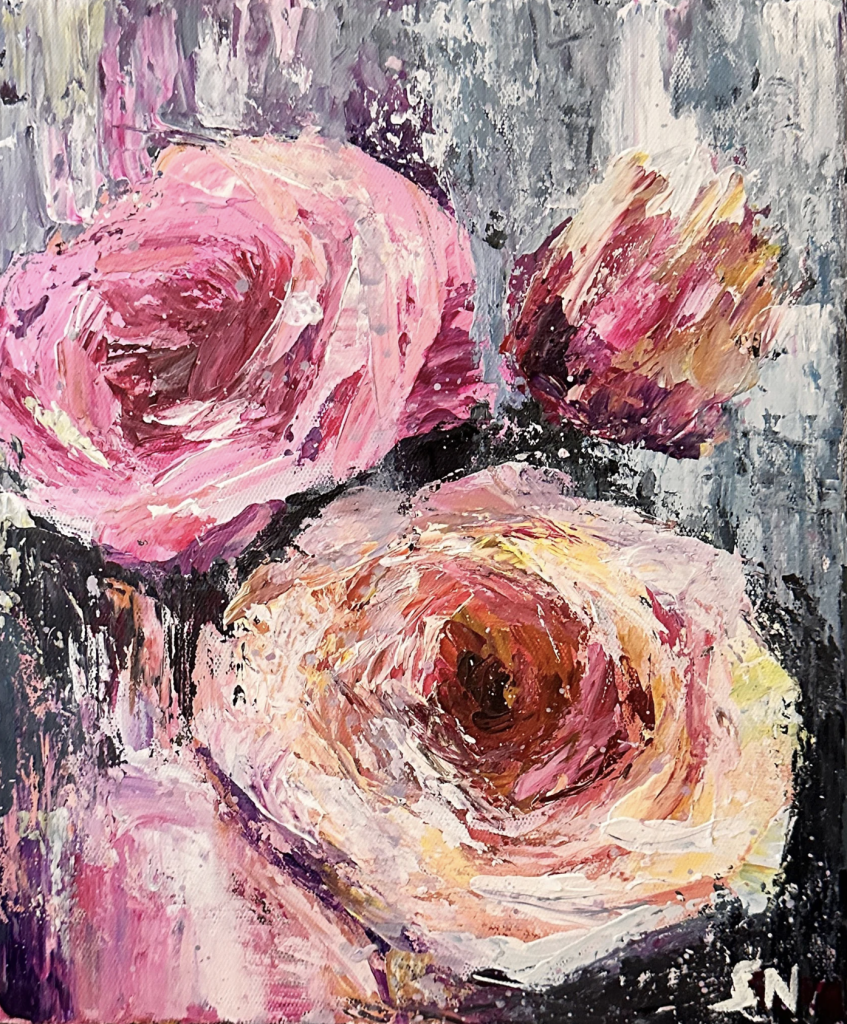
Self-Liberating
Year: 2025
Medium: Acrylic on canvas
© Sonisa Noun
Additional artwork supplied for editorial consideration
Year: 2025
Medium: Acrylic on canvas
© Sonisa Noun
Additional artwork supplied for editorial consideration
I also found comfort in the principle of tawakkul, the practice of ultimate trust and surrendering one’s grievances to God rather than waging endless earthly battles for vindication. Surrendering my material claims had felt like a huge loss when watching from the outside. But through the lens of spiritual non-attachment, giving up the fight was not defeat but an act of reclaiming my peace. I decided that my dignity and sanity were worth more than any piece of property. Exploring these principles did not mean discarding where I came from or cutting ties with my heritage. Instead, it gave me a clearer, softer lens through which to view tradition itself. It helped me separate the genuine beauty of Cambodian culture, such as community care, respect, and deep relational bonds, from the rigid social pressures that quietly hurt women during times of crisis.
Today, as a designer-researcher focusing on care systems and health, that personal experience directly shapes my practice. When I work with qualitative methods, and visual storytelling for sensitive health experiences, I am constantly thinking about spaces of quiet transition. I think about how we design environments, whether healthcare settings, community threads, or editorial platforms, that allow women to feel seen, respected, and dignified rather than evaluated and judged.
The Weight of the Tradition remains an important visual marker in my studio. When I look at the canvas now, I no longer feel the humiliation or distress that drove the initial brushstrokes. The thick, dark layers of paint are still there, but they no longer govern my heart. Walking away from the fight and unravelling those traditional weights cleared space for a creative practice built on vulnerability, and a spiritual path anchored in lasting peace.
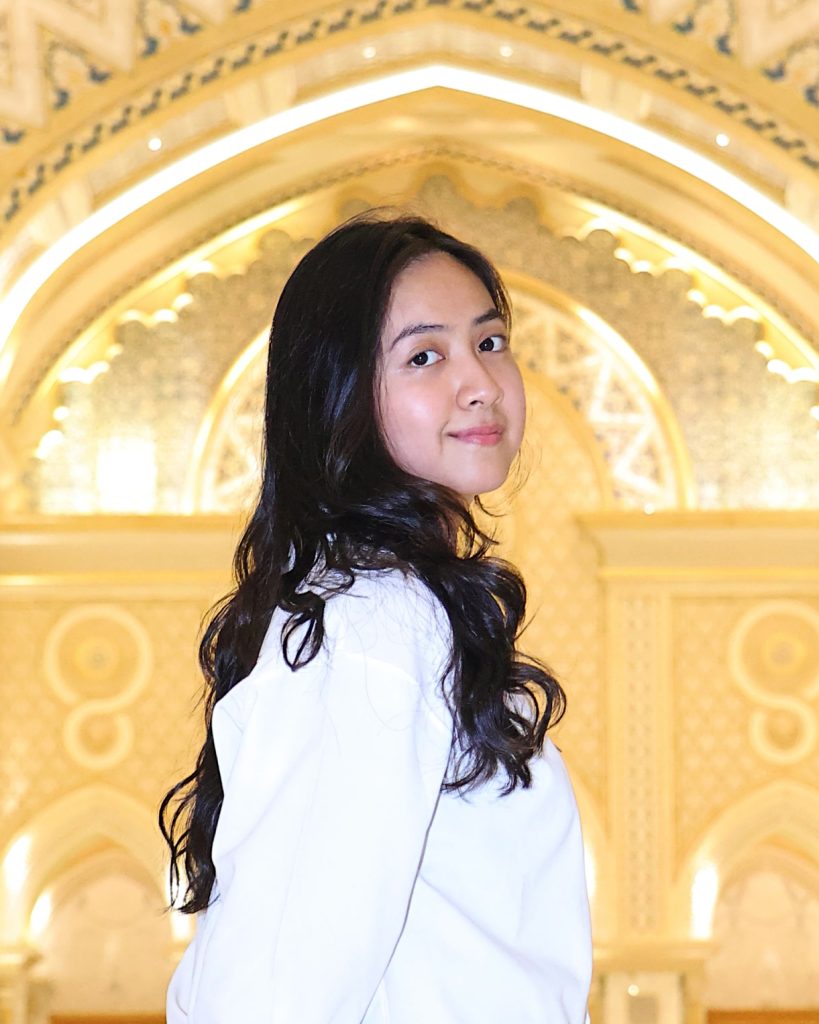
Sonisa Noun is a Cambodian designer-researcher and art director whose work explores visual culture, care, health, and women’s lived experiences. Her practice combines visual storytelling, participatory inquiry, and material methods to examine how social and cultural systems shape dignity, belonging, and transition. Before moving into design research and design anthropology, she worked in commercial advertising and art direction. She is currently undertaking postgraduate study in the United Kingdom.
Submission Track
This piece falls under our 'submission track' and is the intellectual property of the creator. Al-Mujadilah is only licensed to host and promote the piece.
Related Highlights
Op-ed